
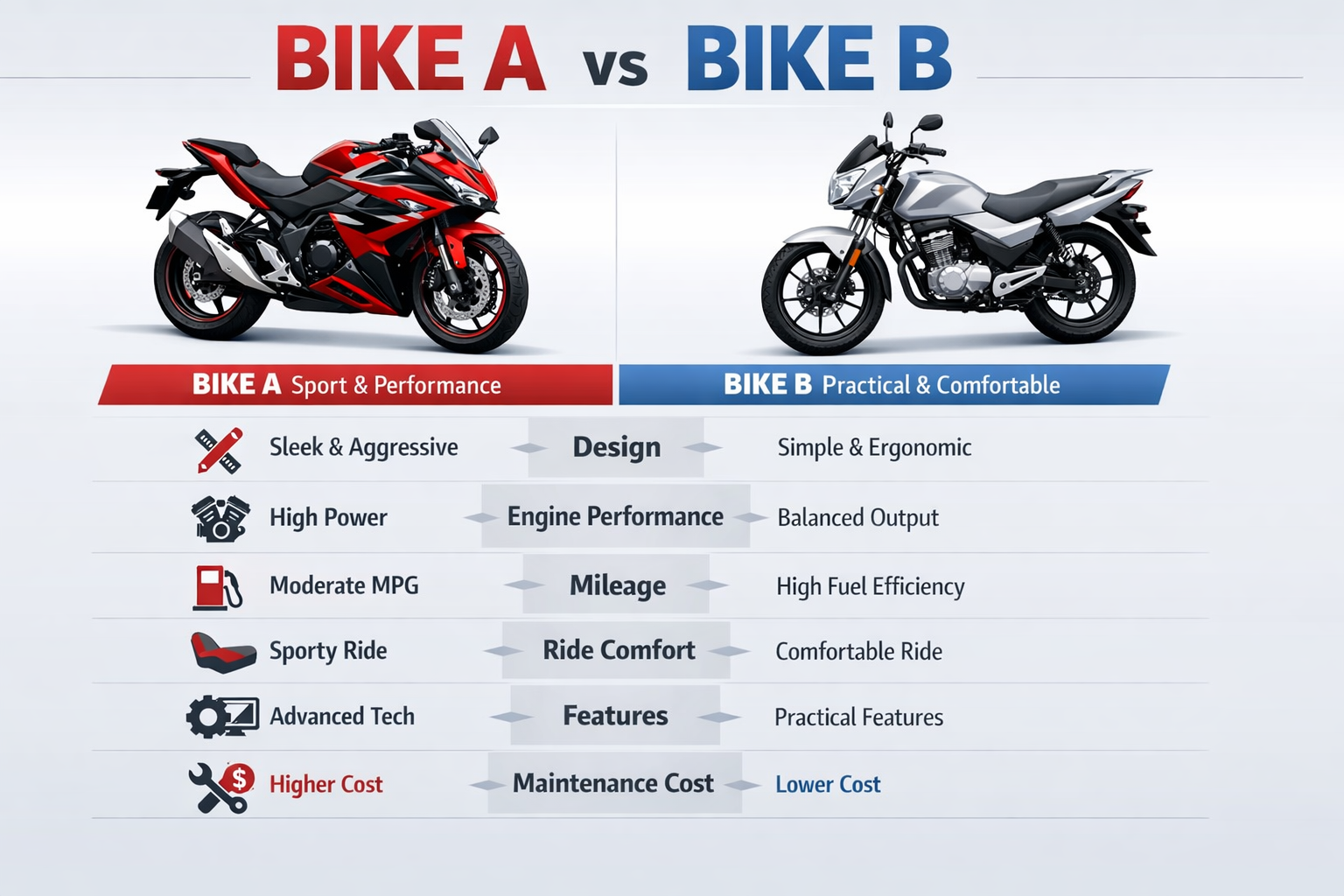
Choosing the right bike can be confusing, especially when multiple options in the same segment offer similar features and pricing. Bike A and Bike B are two popular choices among buyers looking for performance, comfort, and value for money. In this detailed comparison, we break down design, engine performance, mileage, features, comfort, maintenance, and overall value to help you decide which bike suits your needs better.
Design & Styling
Bike A focuses on a sporty and aggressive design, making it appealing to younger riders and enthusiasts. Sharp body lines, bold graphics, and a muscular stance give it a performance-oriented look. It stands out easily on the road and is designed to attract riders who want a modern and stylish bike.
Bike B, on the other hand, offers a more balanced and practical design. Its styling is subtle, clean, and slightly more mature. This makes Bike B suitable for daily commuters who prefer a simple yet premium look without too much flash.
Engine Performance
When it comes to engine performance, Bike A is tuned for quick acceleration and higher top-end performance. It feels more responsive, especially during overtakes and highway riding. Riders who enjoy spirited riding will appreciate Bike A’s power delivery.
Bike B prioritizes smoothness and stability over outright performance. The engine is refined and delivers consistent power, making it ideal for city traffic and long rides. While it may not feel as aggressive as Bike A, it offers a relaxed and comfortable riding experience.
Mileage & Fuel Efficiency
Fuel efficiency plays a major role in the buying decision. Bike A delivers decent mileage, but its performance-oriented tuning means fuel consumption can increase during aggressive riding.
Bike B clearly has an edge in this area. Its engine is optimized for better fuel efficiency, making it more economical for daily use. Riders who travel long distances regularly may find Bike B more budget-friendly in the long run.
Ride Comfort & Handling
Bike A has a slightly stiffer suspension setup, which improves handling at higher speeds but may feel firm on rough roads. It is well-suited for smooth highways and sporty riding conditions.
Bike B offers a softer and more comfortable suspension, absorbing bumps and uneven roads more effectively. This makes it a better choice for city commuting and long-distance rides where comfort is a priority.
Features & Technology
Bike A usually comes with modern and sporty features, such as digital displays, performance-focused riding modes, and sharper instrumentation. It appeals to tech-savvy riders who enjoy advanced features.
Bike B focuses on practical features like easy-to-read displays, useful indicators, and user-friendly controls. While it may not feel as futuristic, it delivers everything required for a hassle-free riding experience.
Maintenance & Ownership Cost
Maintenance cost is an important factor for long-term ownership. Bike A may require slightly higher maintenance due to its performance-focused components and riding style.
Bike B is generally easier and cheaper to maintain, making it ideal for riders who want low ownership costs and fewer service hassles.
Who Should Buy Bike A?
Bike A is ideal for:
- Riders who love sporty performance
- Younger buyers and enthusiasts
- Those who ride on highways frequently
- People who prefer bold design and quick acceleration
Who Should Buy Bike B?
Bike B is best for:
- Daily commuters
- Riders who prioritize comfort and mileage
- Long-distance travelers
- Buyers looking for low maintenance and reliability
Final Verdict: Bike A vs Bike B
Both Bike A and Bike B are excellent choices, but they cater to different types of riders. If performance, style, and excitement matter most, Bike A is the better option. If comfort, fuel efficiency, and long-term savings are your priorities, Bike B makes more sense.
Ultimately, the right choice depends on your riding style, budget, and daily usage. Consider test riding both bikes to understand which one feels right for you before making a final decision.