
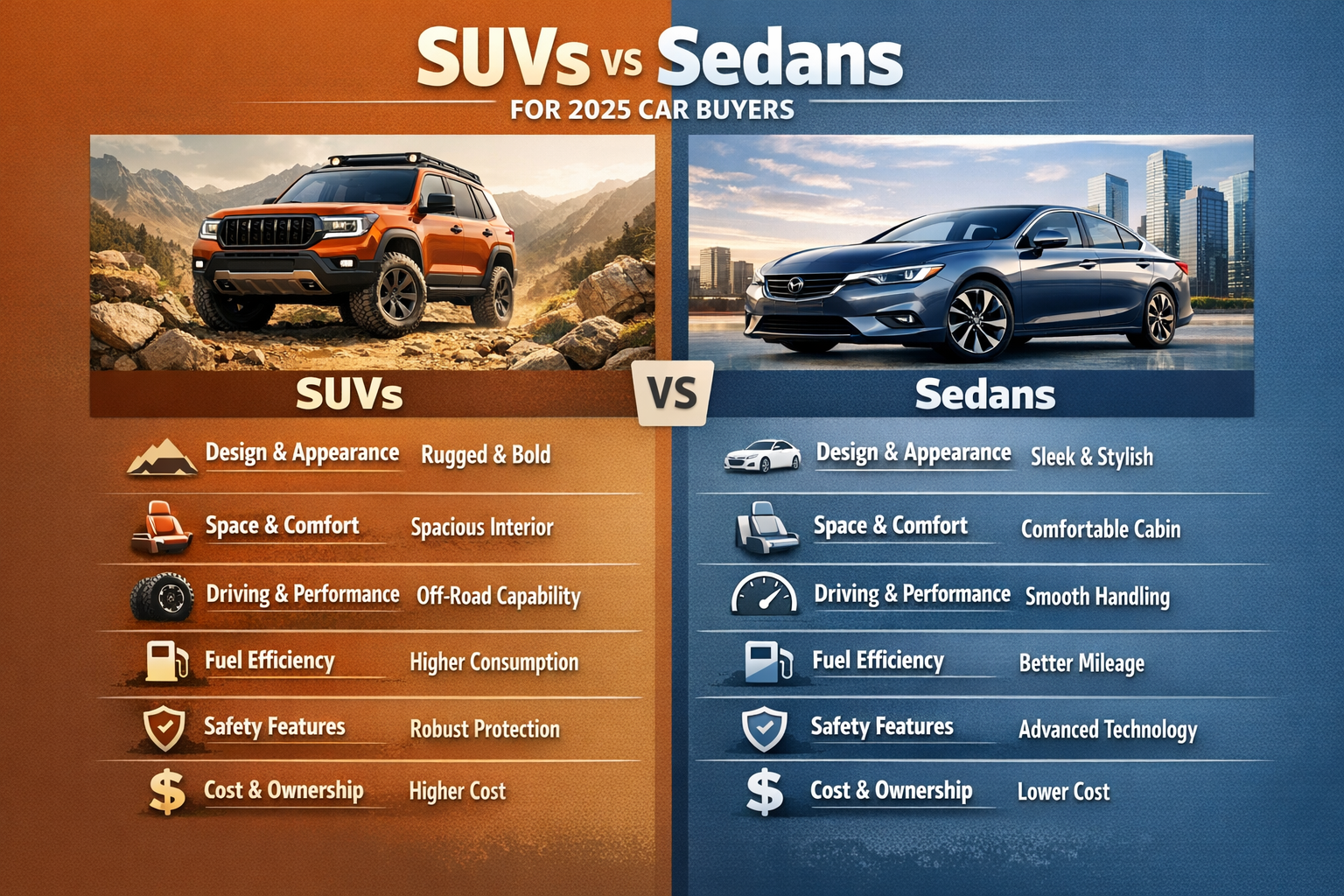
When it comes to choosing a new car, one of the most common dilemmas buyers face is deciding between an SUV and a Sedan. Both body styles have strong followings, but they serve different needs depending on your lifestyle, driving habits, budget, and priorities. In this comparison, we break down the differences in terms of design, comfort, performance, mileage, space, safety, cost, and usability, so you can decide which one suits you best in 2025.
What Is an SUV and What Is a Sedan?
SUV (Sport Utility Vehicle)
SUVs are larger vehicles designed for versatility. They typically offer higher ground clearance, upright seating, aggressive looks, and often come with all‑wheel or four‑wheel drive options. They are built for both urban roads and rough terrain.
Sedan
Sedans are traditional passenger cars with a separate trunk. They focus on comfort, fuel efficiency, and smooth handling on city and highway roads. Sedans are generally lower to the ground and lighter than SUVs.
Design & Appearance
SUV
- Tall stance with rugged design
- Larger wheels and a commanding road presence
- Often higher seating position for better visibility
Sedan
- Sleek, aerodynamic silhouette
- Typically lower profile, giving a sportier look
- Elegant and refined styling
Verdict: If you prefer a bold, commanding look, SUVs win. If you want a stylish, refined appearance, sedans are more appealing.
Space, Comfort & Practicality
Passenger Space
SUV:
- Roomier cabin
- Higher seating position improves visibility
- Better headroom and comfortable for taller passengers
Sedan:
- Spacious for four adults, comfortable legroom
- Slightly lower seating might feel snug for taller riders
Boot Space
SUVs usually have larger storage capacity, which is great for luggage or gear. Sedans typically have a separate closed boot that is still generous but less versatile than SUV cargo areas.
Verdict: For families or frequent travelers, SUVs offer more space. Sedans are comfortable for everyday use and smaller family needs.
Driving & Performance
Handling & Ride Quality
SUV:
- Higher ground clearance makes them suitable for rough roads
- Ride quality can be stiffer due to bigger suspension
Sedan:
- Lower center of gravity means better handling and smoother ride
- More agile in city traffic and twisty roads
Off‑Road Capability
SUVs with 4WD or AWD can handle muddy terrain, dirt tracks, and steep inclines. Sedans are best suited for paved city and highway roads.
Verdict: For urban comfort and smooth handling, sedans excel. For rough terrain and adventurous driving, SUVs are the better choice.
Performance & Engine Options
SUVs often come with larger engine options, which translate to more power and torque — helpful for carrying more weight or climbing steep roads. But larger engines can mean lower fuel efficiency.
Sedans usually prioritize smaller, refined engines that deliver balanced performance and efficiency. Most modern sedans offer turbo options that give spirited performance without huge fuel penalties.
Verdict: If you want better power with utility, SUVs lead. If you want efficient everyday performance, sedans are very competitive.
Mileage & Fuel Efficiency
Sedan:
- Typically more fuel‑efficient due to lighter weight and aerodynamic shape
- Better highway mileage
SUV:
- Higher weight and bigger engines reduce fuel economy
- New SUV models with mild‑hybrid or hybrid powertrains are changing the game
Verdict: Sedans generally return better mileage, making them economical for daily commuting.
Safety & Features
Both SUVs and sedans in 2025 come loaded with modern safety features such as:
- Multiple airbags
- ABS with EBD
- Traction control
- Advanced driver assistance systems (ADAS)
- Blind‑spot monitoring
SUV Advantage:
- Higher driving position improves visibility
- Built for tougher road conditions
Sedan Advantage:
- Lower rollover risk due to a lower center of gravity
- Often sharper handling in emergencies
Verdict: Both can be equally safe — it depends on the actual model and feature list rather than just body type.
Cost & Ownership
Purchase Price
SUVs are usually more expensive upfront compared to sedans in the same segment due to size and capabilities.
Maintenance & Running Cost
- Sedans: Lower maintenance costs, better fuel efficiency
- SUVs: Slightly higher maintenance and fuel costs, but higher resale value in some markets
Verdict: Sedans are easier on the pocket overall, especially for first‑time buyers or city commuters.
Ideal Buyer — Who Should Choose What?
🔹 Choose an SUV if you:
- Have a large family
- Travel long distances or rough roads
- Want a commanding road presence
- Prefer higher seating and cargo space
🔹 Choose a Sedan if you:
- Prioritize fuel economy
- Mostly drive in the city or on highways
- Want a smooth, comfortable ride
- Prefer a sportier look
Quick Comparison Table
| Feature | SUV | Sedan |
|---|---|---|
| Price | Higher | Lower |
| Fuel Efficiency | Moderate | High |
| Space & Comfort | Excellent | Good |
| Handling | Less agile | More agile |
| Off‑Road Capability | Better | Moderate |
| Safety Visibility | Higher | Stable |
| Best For | Families & adventures | City & highway commuting |
Final Take: SUV vs Sedan — Which Is Better?
There’s no universal winner — it boils down to your needs and lifestyle:
✅ Go for an SUV if you want space, utility, and rugged capability.
✅ Choose a Sedan if you prefer efficiency, smooth handling, and urban comfort.
In 2025, both SUVs and sedans are equipped with smart tech, safety features, and refinement. Your choice should reflect how you drive, where you drive, and how much you plan to spend.